Welcome to our new site!
If you had an account with us on our previous site, you'll need to reset your password here.
Close this alert

Welcome to our new site!
If you had an account with us on our previous site, you'll need to reset your password here.
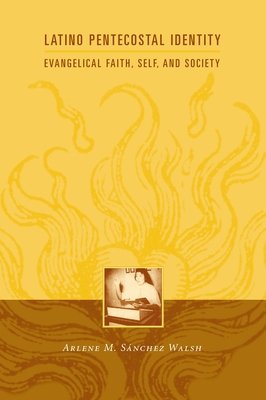
Of the thirty-seven million Latinos living in the United States, nearly five million declare themselves to be either Pentecostal or Charismatic, and more convert every day. Latino Pentecostal Identity examines the historical and contemporary rise of Pentecostalism among Latinos, their conversion from other denominations, and the difficulties involved in reconciling conflicts of ethnic and religious identity. The book also looks at how evangelical groups encourage the severing of ethnic ties in favor of spiritual community and the ambivalence Latinos face when their faith fails to protect them from racial discrimination.
Latinos are not new to Pentecostalism; indeed, they have been becoming Pentecostal for more than a hundred years. Thus several generations have never belonged to any other faith. Yet, as Arlene M. S nchez Walsh articulates, the perception of adherents as Catholic converts persists, eliding the reality of a specific Latino Pentecostal population that both participates in the spiritual and material culture of the larger evangelical Christian movement and imprints that movement with its own experiences. Focusing on three groups of Latino Pentecostals/Charismatics--the Assemblies of God, Victory Outreach, and the Vineyard--S nchez Walsh considers issues such as the commodification of Latino evangelical culture, the Latinization of Pentecostalism, and the ways in which Latino Pentecostals have differentiated themselves from the larger Latino Catholic culture. Extensive fieldwork, surveys, and personal interviews inform her research and show how, in an overwhelmingly Euro-American denomination, diverse Latino faith communities--U.S. Chicano churches, pan-Latin American immigrant churches, and mixed Latin American and U.S. Latino churches--have carved out their own unique religious space.