Welcome to our new site!
If you had an account with us on our previous site, you'll need to reset your password here.
Close this alert

Welcome to our new site!
If you had an account with us on our previous site, you'll need to reset your password here.
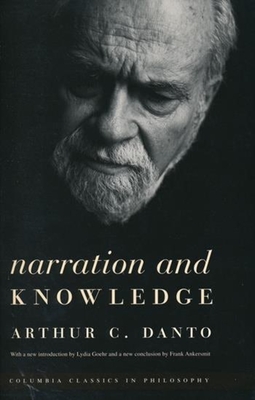
Now in its third edition, Narration and Knowledge is a classic work exploring the nature of historical knowledge and its reliance on narrative. Analytical philosopher Arthur C. Danto introduces the concept of "narrative sentences," in which an event is described with reference to later events (for example, "the Thirty Years' War began in 1618") and discusses why such sentences cannot be understood until the later event happens (no one could have said in 1618 that "the Thirty Years' War began today"). Danto compares narrative and scientific explanation and explores the legitimacy of historical laws. He also argues that history is an autonomous and humanist discipline incapable of being reduced to scientific descriptions.
Lydia Goehr's new introduction illustrates Danto's main arguments by questioning her very role, first, as an introducer of a book that has not yet been read by readers and, second, as an interpreter of a book written forty years ago. Frank Ankersmit's conclusion revisits the initial impact of the publication of Narration and Knowledge and considers its enduring legacy.