Welcome to our new site!
If you had an account with us on our previous site, you'll need to reset your password here.
Close this alert

Welcome to our new site!
If you had an account with us on our previous site, you'll need to reset your password here.
Choice Outstanding Title
H. R. Haldeman, President Nixon's former chief of staff, is said to have boasted: "Every president needs a son of a bitch, and I'm Nixon's. I'm his buffer and I'm his bastard. I get done what he wants done and I take the heat instead of him."
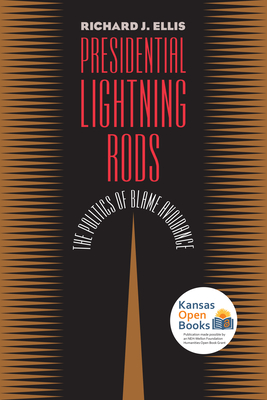
Richard Ellis explores the widely discussed but poorly understood phenomenon of presidential "lightning rods"--cabinet officials who "take the heat" instead of their bosses. Whether by intent or circumstance, these officials divert criticism and blame away from their presidents. The phenomenon is so common that it's assumed to be an essential item in every president's managerial toolbox. But, Ellis argues, such assumptions can oversimplify our understanding of this tool.
Ellis advises against indiscriminate use of the lightning rod metaphor. Such labeling can hide as much as it reveals about presidential administration and policymaking at the cabinet level. The metaphor often misleads by suggesting strategic intent on the president's part while obscuring the calculations and objectives of presidential adversaries and the lightning rods themselves.
Ellis also illuminates the opportunities and difficulties that various presidential posts--especially secretaries of state, chiefs of staff, and vice presidents--have offered for deflecting blame from our presidents. His study offers numerous detailed and instructive examples from the administrations of Truman (Dean Acheson); Eisenhower (Richard Nixon, John Foster Dulles, Herbert Brownell, and Ezra Taft Benson); LBJ (Hubert Humphrey); Ford (Henry Kissinger); and Reagan (James Watt).
These examples, Ellis suggests, should guide our understanding of the relationship between lightning rods and presidential leadership, policymaking, and ratings. Blame avoidance, he warns, does have its limitations and may even backfire at times. Nevertheless, President Clinton and his successors may need to rely on such tools. The presidency, Ellis points out, finds itself the object of increasingly intense partisan debate and microscopic scrutiny by a wary press. Lightning rods can deflect such heat and help the president test policies, gauge public opinion, and protect his political power and public image. Ellis's book is an essential primer for helping us understand this process.