Welcome to our new site!
If you had an account with us on our previous site, you'll need to reset your password here.
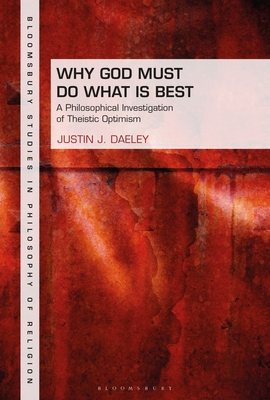
Why God Must Do What Is Best: A Philosophical Investigation of Theistic Optimism (Bloomsbury Studies in Philosophy of Religion)
Description
The idea that God, understood as the most perfect being, must create the best possible world is often underacknowledged by contemporary theologians and philosophers of religion. This book clearly demonstrates the rationale for what Justin J. Daeley calls Theistic Optimism and interacts with the existing literature in order to highlight its limitations. While locating Theistic Optimism in the thought of Gottfried Leibniz, Daeley argues that Theistic Optimism is consistent with divine freedom, aseity, gratitude, and our typical modal intuitions. By offering plausible solutions to each of the criticisms levelled against Theistic Optimism, he also provides a vigorous and original defence against the charge that it deviates from the Christian tradition.
Engaging with both the Christian tradition and contemporary theologians and philosophers, Why God Must Do What is Best positions the idea of Theistic Optimism firmly within the language of contemporary philosophy of religion.
Other Books in Series
The Rational Ontological Argument: Modality, Ontology and God (Bloomsbury Studies in Philosophy of Religion)
A Defence of Theological Virtue Ethics (Bloomsbury Studies in Philosophy of Religion)
Contemplating Divine Simplicity: Five Views (Bloomsbury Studies in Philosophy of Religion)
Cosmopsychism and Original Sin: Corruption in a Conscious Universe (Bloomsbury Studies in Philosophy of Religion)
Free Will in Philosophical Theology (Bloomsbury Studies in Philosophy of Religion)
The Evolutionary Argument Against Naturalism: Context, Exposition, and Repercussions (Bloomsbury Studies in Philosophy of Religion)
Sacred Music, Religious Desire and Knowledge of God: The Music of Our Human Longing (Bloomsbury Studies in Philosophy of Religion)
The Rational Ontological Argument: Modality, Ontology and God (Bloomsbury Studies in Philosophy of Religion)
The Evolutionary Argument Against Naturalism: Context, Exposition, and Repercussions (Bloomsbury Studies in Philosophy of Religion)
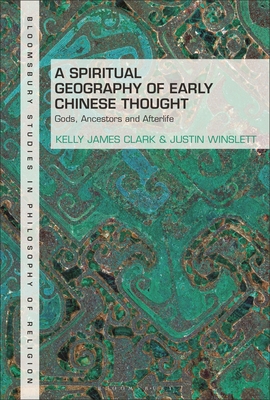
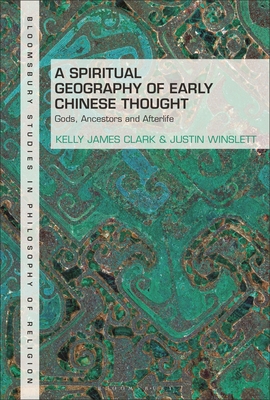
A Spiritual Geography of Early Chinese Thought: Gods, Ancestors, and Afterlife (Bloomsbury Studies in Philosophy of Religion)
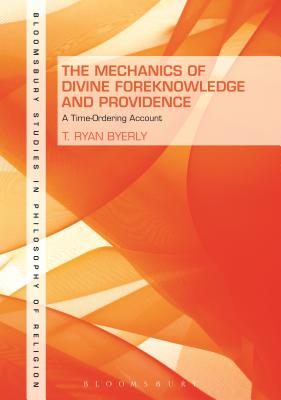
The Mechanics of Divine Foreknowledge and Providence: A Time-Ordering Account (Bloomsbury Studies in Philosophy of Religion)
Goodness, God, and Evil (Bloomsbury Studies in Philosophy of Religion)
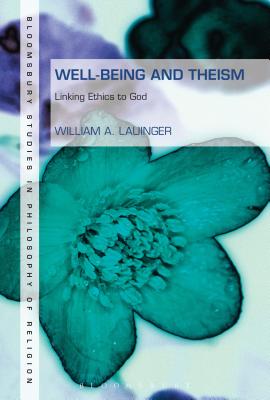
Well-Being and Theism: Linking Ethics to God (Bloomsbury Studies in Philosophy of Religion)
The Kalam Cosmological Argument, Volume 2: Scientific Evidence for the Beginning of the Universe (Bloomsbury Studies in Philosophy of Religion)
Free Will and God's Universal Causality: The Dual Sources Account (Bloomsbury Studies in Philosophy of Religion)
On Paul Holmer: A Philosophy and Theology (Bloomsbury Studies in Philosophy of Religion)