Welcome to our new site!
If you had an account with us on our previous site, you'll need to reset your password here.
Close this alert

Welcome to our new site!
If you had an account with us on our previous site, you'll need to reset your password here.
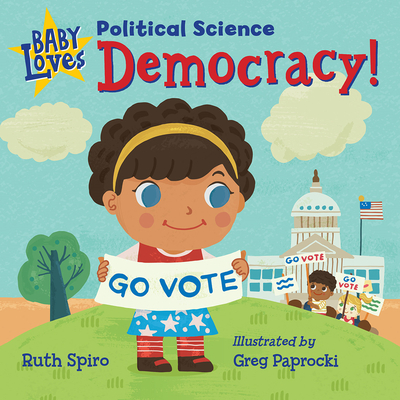
Does your junior citizen know how to vote ? Could you explain to your little listener how a democracy works and how officials are elected?
This cute and clever addition to the best-selling Baby Loves Political Science series offers an accurate and simple introduction to what makes a great democracy and how every vote counts that is perfect for babies--and their grown ups.
Baby learns what it means to participate in a democracy where everyone has a voice in electing our leaders. There are many ways for all of us, including the youngest children, to participate--such as making signs and sending postcards, campaigning, attending rallies, and of course getting out the vote!
This timely addition to the series focuses on democracy in a developmentally friendly way. This nonpartisan introduction focuses on a mayoral race and depicts people making signs, sending letters, and going to a polling place. Colorful illustrations help contextualize some events that a little one may not have experienced yet. While this book will be well appreciated by traditional board book readers, it is also a great tool to explain this process to older children.
—School Library Journal