Welcome to our new site!
If you had an account with us on our previous site, you'll need to reset your password here.
Close this alert

Welcome to our new site!
If you had an account with us on our previous site, you'll need to reset your password here.
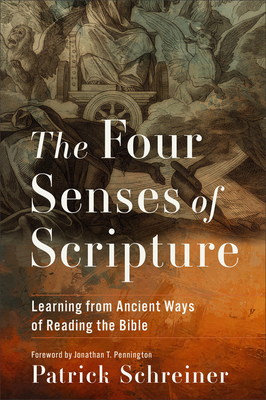
In the modern era, biblical hermeneutics has been dominated by the grammatical-historical method. This represents a departure from the interpretive approach commonly used during the prior 1,700 years of the church, the four senses approach (or quadriga). Those four senses are literal (grammatical...
Read More about The Four Senses of Scripture: Learning from Ancient Ways of Reading the Bible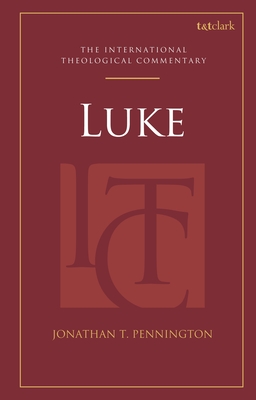
The Gospel of Luke is one of the longest and most well-written pieces of literature within the New Testament canon. Its contribution to the four-fold Gospel book as well as to the interpretation of the New Testament overall is very significant. Modern commentaries on Luke are generally either...
Read More about Luke (Itc) (T&t Clark International Theological Commentary)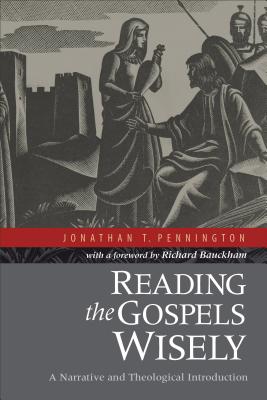
This textbook on how to read the Gospels well can stand on its own as a guide to reading this New Testament genre as Scripture. It is also ideally suited to serve as a supplemental text to more conventional textbooks that discuss each Gospel systematically. Most textbooks tend to introduce students...
Read More about Reading the Gospels Wisely: A Narrative and Theological Introduction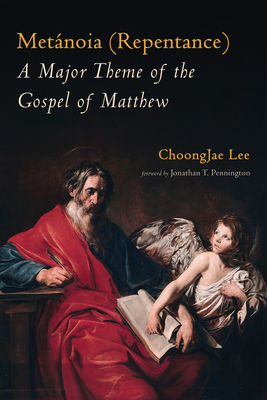
Matthew describes the beginning of Jesus's ministry with the summary words, "μετανοεῖτε (repent/turn), for the kingdom of heaven is at hand" (3:2; 4:17). Why does Matthew use this command, μετανοεῖτε, at the beginning of his ministry, and how does it relate to the rest of the Gospel? What do...
Read More about Metánoia (Repentance): A Major Theme of the Gospel of Matthew
Matthew describes the beginning of Jesus's ministry with the summary words, "μετανοεῖτε (repent/turn), for the kingdom of heaven is at hand" (3:2; 4:17). Why does Matthew use this command, μετανοεῖτε, at the beginning of his ministry, and how does it relate to the rest of the Gospel? What do...
Read More about Metánoia (Repentance): A Major Theme of the Gospel of Matthew
For first-century people, cosmology was a fundamental part of their worldview. Whether it was the philosopher contemplating the perfection of the heavenly orbits, the farmer searching the sky for signs of when to plant his crops, or the desert-dwelling sectarian looking for the end of the world, the...
Read More about Cosmology and New Testament Theology (Library of New Testament Studies #355)
Cutting-edge reflections on a variety of biblical and theological subjects
Over the course of his distinguished career Richard Bauckham has made pioneering contributions to diverse areas of scholarship ranging from ethics and contemporary issues to hermeneutical problems and theology, often drawing...
Read More about In the Fullness of Time: Essays on Christology, Creation, and Eschatology in Honor of Richard Bauckham
A much-overlooked aspect of the Gospel of Matthew is the theme of heaven and earth. Rather than being a reverential circumlocution for God, 'heaven' in Matthew is part of a highly developed discourse of heaven and earth language. Matthew's idiolectic way of using heaven language consists of four...
Read More about Heaven and Earth in the Gospel of Matthew (Novum Testamentum #126)