Welcome to our new site!
If you had an account with us on our previous site, you'll need to reset your password here.
Close this alert

Welcome to our new site!
If you had an account with us on our previous site, you'll need to reset your password here.
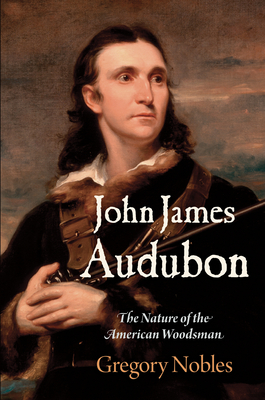
John James Audubon's The Birds of America stands as an unparalleled achievement in American art, a huge book that puts nature dramatically on the page. With that work, Audubon became one of the most adulated artists of his time, and America's first celebrity scientist.
In this fresh approach to Audubon's art and science, Gregory Nobles shows us that Audubon's greatest creation was himself. A self-made man incessantly striving to secure his place in American society, Audubon made himself into a skilled painter, a successful entrepreneur, and a prolific writer, whose words went well beyond birds and scientific description. He sought status with the "gentlemen of science" on both sides of the Atlantic, but he also embraced the ornithology of ordinary people. In pursuit of popular acclaim in art and science, Audubon crafted an expressive, audacious, and decidedly masculine identity as the "American Woodsman," a larger-than-life symbol of the new nation, a role he perfected in his quest for transatlantic fame. Audubon didn't just live his life; he performed it.
In exploring that performance, Nobles pays special attention to Audubon's stories, some of which--the murky circumstances of his birth, a Kentucky hunting trip with Daniel Boone, an armed encounter with a runaway slave--Audubon embellished with evasions and outright lies. Nobles argues that we cannot take all of Audubon's stories literally, but we must take them seriously. By doing so, we come to terms with the central irony of Audubon's true nature: the man who took so much time and trouble to depict birds so accurately left us a bold but deceptive picture of himself.