Welcome to our new site!
If you had an account with us on our previous site, you'll need to reset your password here.
Close this alert

Welcome to our new site!
If you had an account with us on our previous site, you'll need to reset your password here.
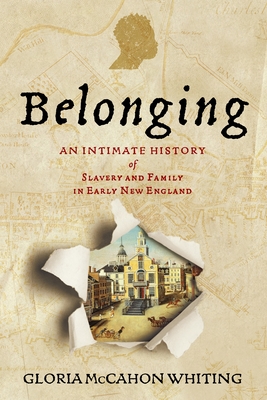
Explores how Black New Englanders maintained a sense of belonging among their kin in the face of slavery
As winter turned to spring in the year 1699, Sebastian and Jane embarked on a campaign of persuasion. The two wished to marry, and they sought the backing of their community in Boston. Nothing, however, could induce Jane's enslaver to consent. Only after her death did Sebastian and Jane manage to wed, forming a long-lasting union even though husband and wife were not always able to live in the same household.
New England is often considered a cradle of liberty in American history, but this snippet of Jane and Sebastian's story reminds us that it was also a cradle of slavery. From the earliest years of colonization, New Englanders bought and sold people, most of whom were of African descent. In Belonging, Gloria McCahon Whiting tells the region's early history from the perspective of the people, like Jane and Sebastian, who belonged to others and who struggled to maintain a sense of belonging among their kin. Through a series of meticulously reconstructed family narratives, Whiting traces the contours of enslaved people's intimate lives in early New England, where they often lived with those who bound them but apart from kin. Enslaved spouses rarely were able to cohabit; fathers and their offspring routinely were separated by inheritance practices; children could be removed from their mothers at an enslaver's whim; and people in bondage had only partial control of their movement through the region, which made more difficult the task of maintaining distant relationships.
But Belonging does more than lay bare the obstacles to family stability for those in bondage. Whiting also charts Afro-New Englanders' persistent demands for intimacy throughout the century and a half stretching from New England's founding to the American Revolution. And she shows how the work of making and maintaining relationships influenced the region's law, religion, society, and politics. Ultimately, the actions taken by people in bondage to fortify their families played a pivotal role in bringing about the collapse of slavery in New England's most populous state, Massachusetts.